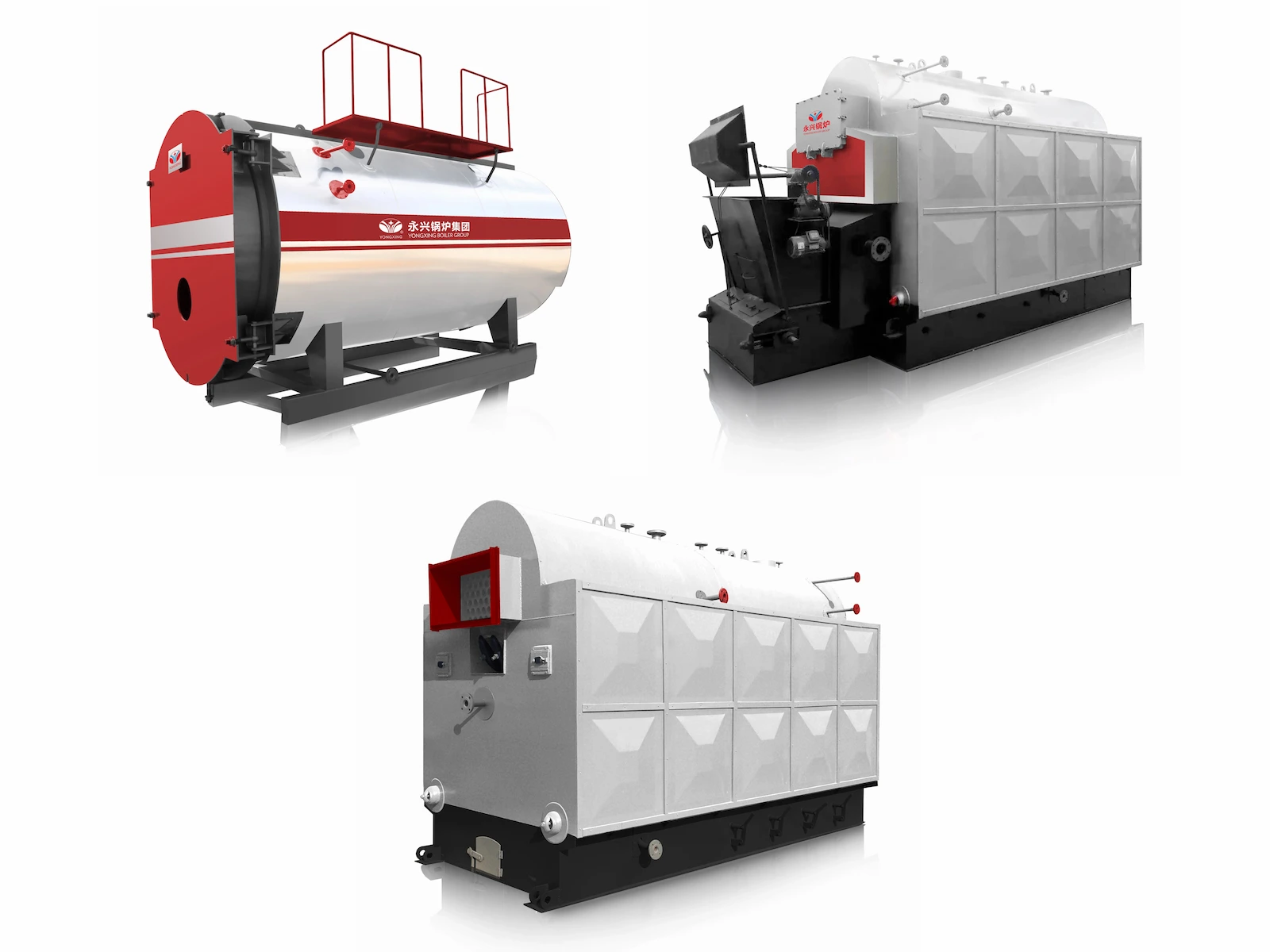
A 1 ton boiler is a compact industrial steam boiler designed to produce 1,000 kg of steam per hour (1 TPH), equivalent to approximately 0.7 MW of thermal capacity. Depending on fuel type and boiler design, the reference 2026 EXW price ranges from approximately USD 8,000 to 23,000 for WNS gas/oil-fired, DZL coal/biomass-fired, and DZH coal/biomass-fired models.
A 1 ton steam boiler is typically suitable for small factories and production lines with relatively low or fluctuating steam demand. Its compact size and lower water volume allow faster steam generation and quicker response to load changes, with packaged gas/oil-fired models typically producing steam within 10–20 minutes from a cold start. Multiple units can also operate in parallel for flexible capacity and future production expansion.
| Model |
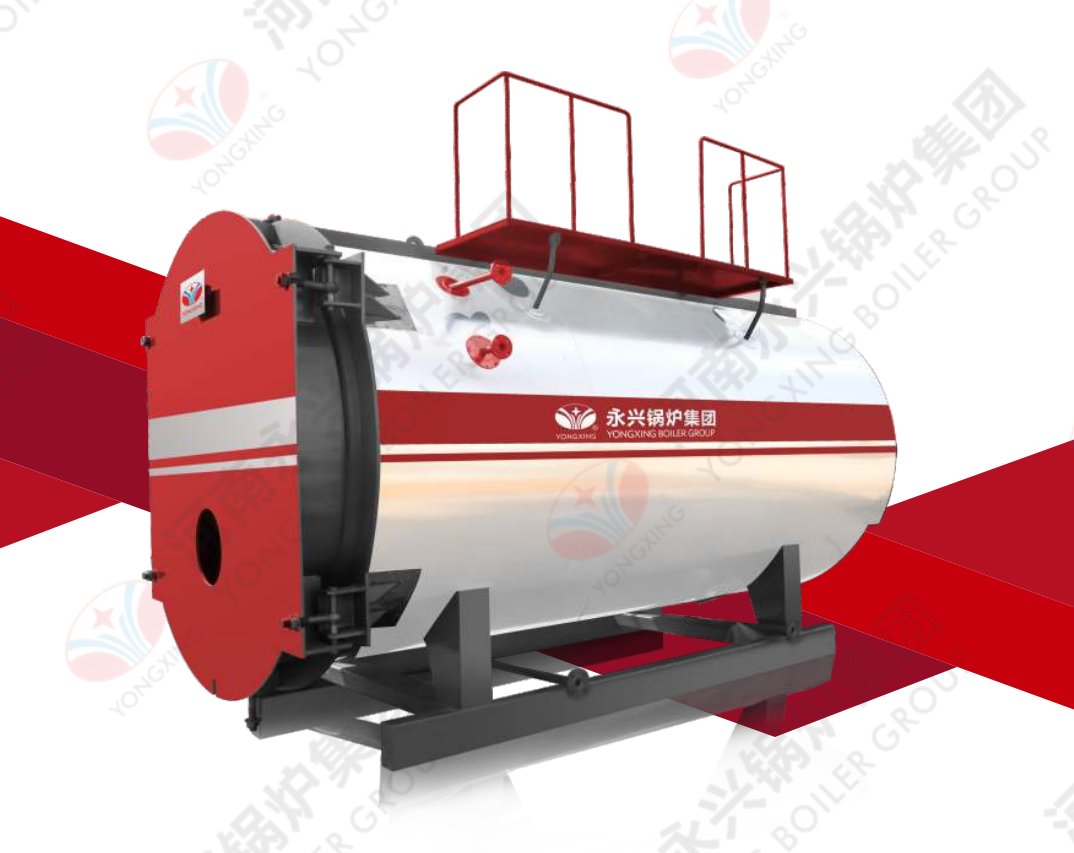
|
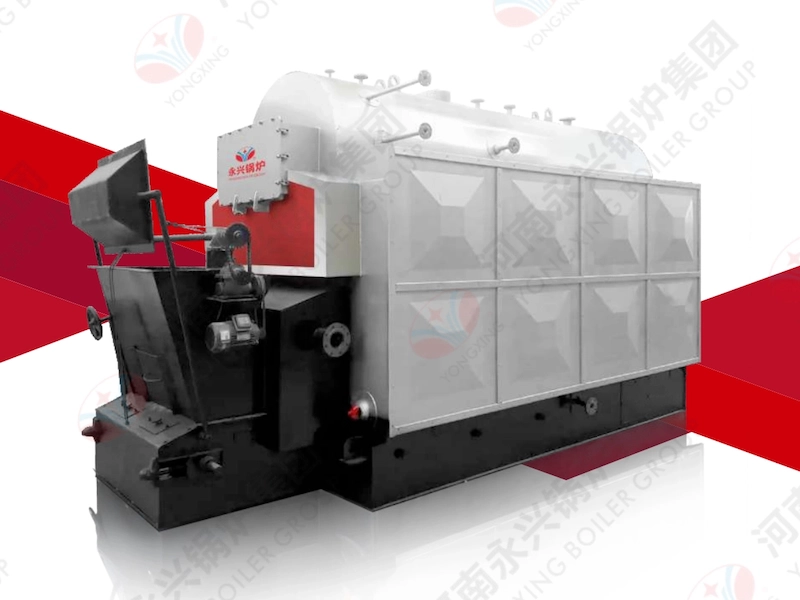
|
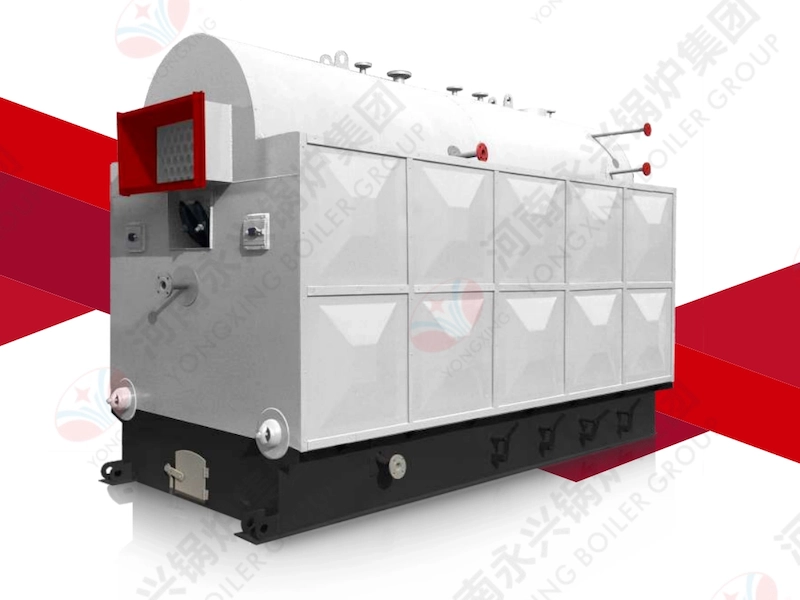
|
| the reference 2026 EXW price | USD 8,000 – 14,000 | USD 13,000 – 23,000 | USD 8,500 – 16,000 |
| Capacity | 1 t/h | 1 t/h | 1 t/h |
| Boiler Type | Gas & oil fired steam boiler | Coal & biomass fired steam boiler | Coal & biomass fired steam boiler |
| Steam Pressure | 1.25 MPa | 1.25 MPa | 1.25 MPa |
| Steam Temperature | 194 °C | 194 °C | 194 °C |
| Compatible Fuels | Light Oil, Heavy Oil, Natural Gas, City Gas, Hydrogen | Coal, biomass | Coal, biomass |
| Thermal Efficiency |
Up to 100.9% based on LHV with condenser; Up to 90–93% without condenser |
Up to 82% without economizer; Up to 88% with economizer |
Up to 80% |
| Design Features |
Compact packaged fire-tube structure; Low-NOx burner system for efficient combustion; Integrated condensing recovery system for improved heat utilization. |
Automated chain grate combustion system; Furnace design suitable for different fuel characteristics; Available with economizer and auxiliary systems for higher thermal efficiency. |
Manual fixed grate combustion system; Simple furnace structure with fewer mechanical components; Suitable for coal, biomass, and solid fuels with different sizes and characteristics. |
| Core Advantages |
High Efficiency: Up to 100.9% based on LHV calculation with condensing recovery; Fast Installation: Factory-assembled package design reduces on-site installation work; Low Emission Operation: Suitable for applications requiring low emissions and stable automatic operation. |
Fuel Flexibility: Suitable for coal and various biomass fuels; Stable Operation: Automatic fuel feeding reduces manual operation requirements; High Efficiency: Thermal efficiency can reach up to 88% with economizer, depending on fuel and operating conditions. |
Low Investment: Simple structure reduces initial equipment cost; Easy Maintenance: Fewer moving parts result in simpler maintenance requirements; Fuel Adaptability: Suitable for various solid fuels with simple feeding requirements. |
| Max Transport Weight(kg) | 4,800 | 15,000(incl. main auxiliaries) | 13,000(incl. main auxiliaries) |
| Max Transport Dimension/(LxWxH) (mm) | 3,200 × 1,800 × 2,000 | 5,200 × 2,100 × 2,600 | 4,500 × 1,800 × 2,800 |
| Transport Mode |
Land: Lowbed trailer Sea: 40' GP/HQ container. |
Land: Lowbed trailer Sea: Open Top (OT) or Flat Rack (FR) container |
Land: Lowbed trailer Sea: Open Top (OT) or Flat Rack (FR) container |
| Installation | Factory-assembled package | Factory-assembled package / Modular assembly | Shipped in sections or semi-assembled |
| Site Installation Requirements |
1. Foundation: Concrete pad (thickness ≥ 200 mm, capacity ≥ 10 tons based on operational weight). 2. Space: 10–20ton crane for unloading; clearance width > 3.0 m, height > 4.0 m. 3. Utilities: Piping, power supply, and flue gas connections pre-routed to tie-in points. |
1. Foundation: Concrete pad (thickness ≥ 250 mm, capacity ≥ 20 tons based on operational weight). 2. Space: 16-25 ton crane for unloading; clearance width > 3.5 m, height > 4.5 m. 3. Utilities: Boiler room opening, access height, flue outlet, and piping interfaces checked and pre-routed. |
1. Foundation: Concrete pad (thickness ≥ 200 mm, capacity ≥ 15 tons based on operational weight). 2. Space: 16-25 ton crane for unloading; clearance width > 3.0 m, height > 4.5 m. 3. Utilities: Access route, lifting opening, and piping interfaces confirmed and pre-routed. |
| Operating Parameters: Rated Gauge Pressure = 1.25 MPa | Standard Enthalpy Demand = 600,000 kcal/ton (Feedwater Temp.≈68°C) | ||||||
|---|---|---|---|---|---|---|
| Boiler Model | Operating Condition | Fuel Type | Thermal Efficiency | Unit Price | Fuel Consumption | Fuel Cost(USD) |
| WNS1-1.25-YQ | Without condenser | Natural Gas | 91.5% | 0.46USD/m³ | 77.1m³ | 35.49 |
| WNS1-1.25-YQ | With condenser, LHV | Natural Gas | 100.9% | 0.46USD/m³ | 70.0m³ | 32.18 |
| DZL1-1.25-T | Without economizer | Biomass Pellet | 82.0% | 0.16USD/kg | 182.9kg | 29.27 |
| DZL1-1.25-AII | Without economizer | Bituminous Coal | 82.0% | 0.13USD/kg | 146.3kg | 19.02 |
| DZL1-1.25-T | With economizer | Biomass Pellet | 88.0% | 0.16USD/kg | 170.5kg | 27.27 |
| DZL1-1.25-AII | With economizer | Bituminous Coal | 88.0% | 0.13USD/kg | 136.4kg | 17.73 |
| DZH1-1.25-T | Standard (Manual) | Biomass Pellet | 80.0% | 0.16USD/kg | 187.5kg | 30 |
| DZH1-1.25-AII | Standard (Manual) | Bituminous Coal | 80.0% | 0.13USD/kg | 150.0kg | 19.50 |
|
Note: 1、All projections are theoretical estimates assuming constant fuel prices. Fuel calorific values and efficiencies are expressed on an LHV basis (Natural Gas: 8,500 kcal/m³ | Biomass: 4,000 kcal/kg | Bituminous Coal: 5,000 kcal/kg). 2、Thermal efficiencies are standardized baseline values for comparison only; actual performance varies with fuel quality, moisture content, and operating conditions. 3、For condensing natural gas boilers, efficiencies above 100% reflect LHV-based latent heat recovery. 4、Extra operating costs such as electricity, water, labor, and maintenance are excluded. 5、Intermediate calculations use full precision; displayed figures are rounded. |
||||||
the reference 2026 EXW price of a 1 ton steam boiler:
1 ton gas/oil fired steam boiler (WNS): USD 8,000 – 14,000
1 ton coal/biomass fired steam boiler (DZL): USD 13,000 – 23,000
1 ton coal/biomass fired steam boiler (DZH): USD 8,500 – 16,000
The final price depends on working pressure, fuel system, burner selection, auxiliary equipment, and project requirements.
Standard non-condensing gas models (88%–92% efficiency) consume approximately 75–80 Nm³/h of natural gas at full load.
With a flue gas condensing recovery system, thermal efficiency can reach up to 100.9% based on LHV calculation, lowering gas consumption to around 70–72 Nm³/h.
A rated capacity of 1 t/h steam output is equivalent to approximately 0.7 MW, 700 kW, 600,000 kcal/h, or about 64–71 Boiler Horsepower (BHP), depending on the conversion standard.
Regular bottom blowdown removes sludge and dissolved solids from the boiler water.It helps control TDS levels, reduce scale formation, and prevent steam carryover. The blowdown frequency should be adjusted according to water quality conditions.
Due to its compact water volume and high heat transfer intensity, a 1 ton boiler requires careful water quality control.Scale deposits reduce heat transfer efficiency and increase the risk of overheating, while ash accumulation can reduce draft and heat transfer if not removed regularly.
Gas-fired boilers typically require inspection every 6 months, or more frequently under heavy cycling conditions.
Biomass boilers require regular ash removal and tube cleaning, while oil-fired boilers need periodic soot cleaning. The maintenance interval depends on fuel quality and operating conditions.
A 1 ton boiler is suitable for small food processing plants, laundries, pilot production lines, laboratories, and chemical facilities with stable steam demand and limited installation space.For large load fluctuations, a steam accumulator can help improve system stability.
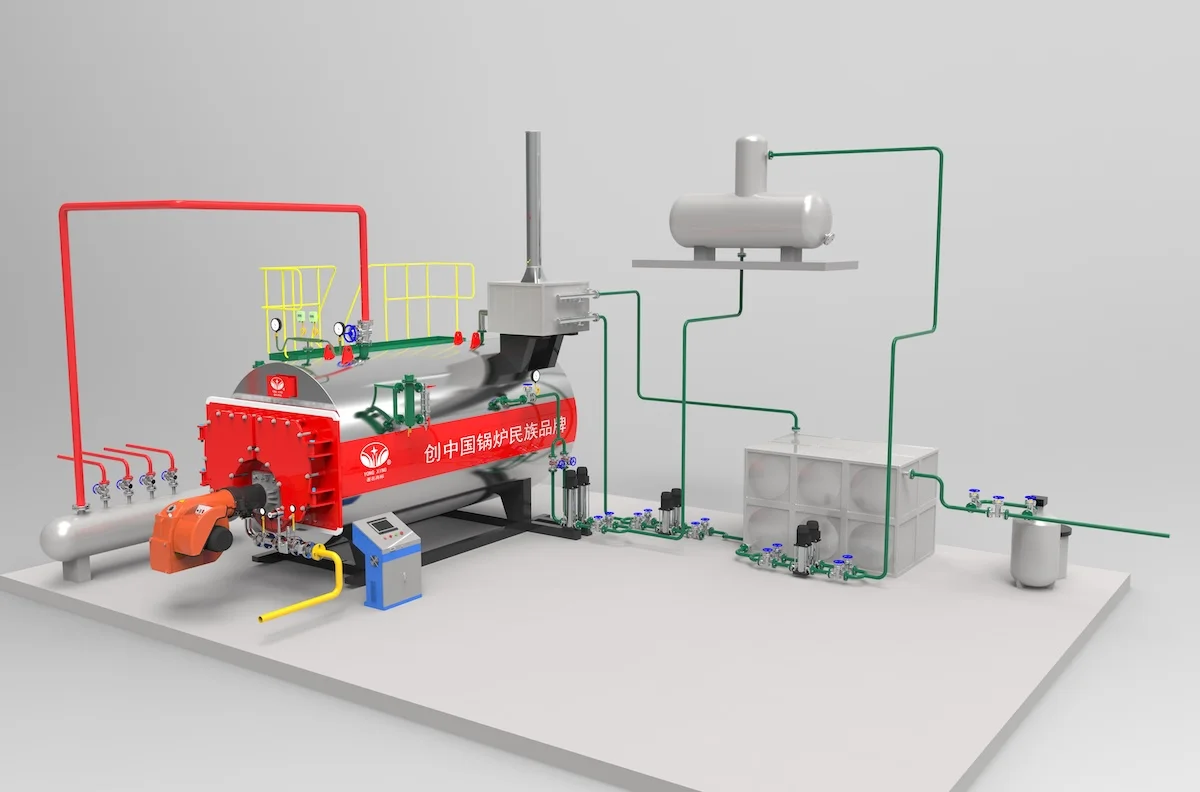
A standard package includes the boiler body, burner, control panel, water treatment equipment, feedwater pumps, economizer or condenser, valves, instrumentation, and safety protection devices.
Additional equipment, such as steam headers and auxiliary systems, can be configured according to project requirements.
A packaged 1 ton boiler mainly requires connections for feedwater, electrical power, fuel supply, steam outlet, and flue gas systems before commissioning.
The three-pass design extends the flue gas path to improve heat transfer.The wet-back chamber uses water cooling instead of rear refractory bricks, reducing refractory maintenance and improving long-term operating reliability.
Boiler solutions for the food industry
Boiler solutions for chemical
Boiler solutions for heating industry
Boiler solutions for pharmaceutical
Boiler solutions for the hotel industry
Boiler solutions for paper industry
Boiler solutions for textile industry
Boiler solutions for building materials
Boiler solutions for breeding
Boiler solutions for feed industry
Boiler solutions for mining industry
Boiler solutions for brewing industry
Yongxing Special Equipment Co., Ltd. is located in Taikang County, Zhoukou City, Henan Province. Established in the early 1980s, it is a company specializing in the research, design, production, sales, installation, renovation, and a series of services for products such as boilers and pressure vessels.
As one of the earlier companies in the domestic boiler industry, Yongxing Special Equipment was the first to obtain the Class A boiler manufacturing license issued by the State Administration for Market Regulation. Subsequently, it acquired the Class A pressure vessel manufacturing license and the Class A boiler installation, renovation, and repair license.
Development History
Manufacturing Plant Area
Patented Technology
Exported Countries
Tell us your project type and operating requirements. We will provide you with the best solution based on your requirements.