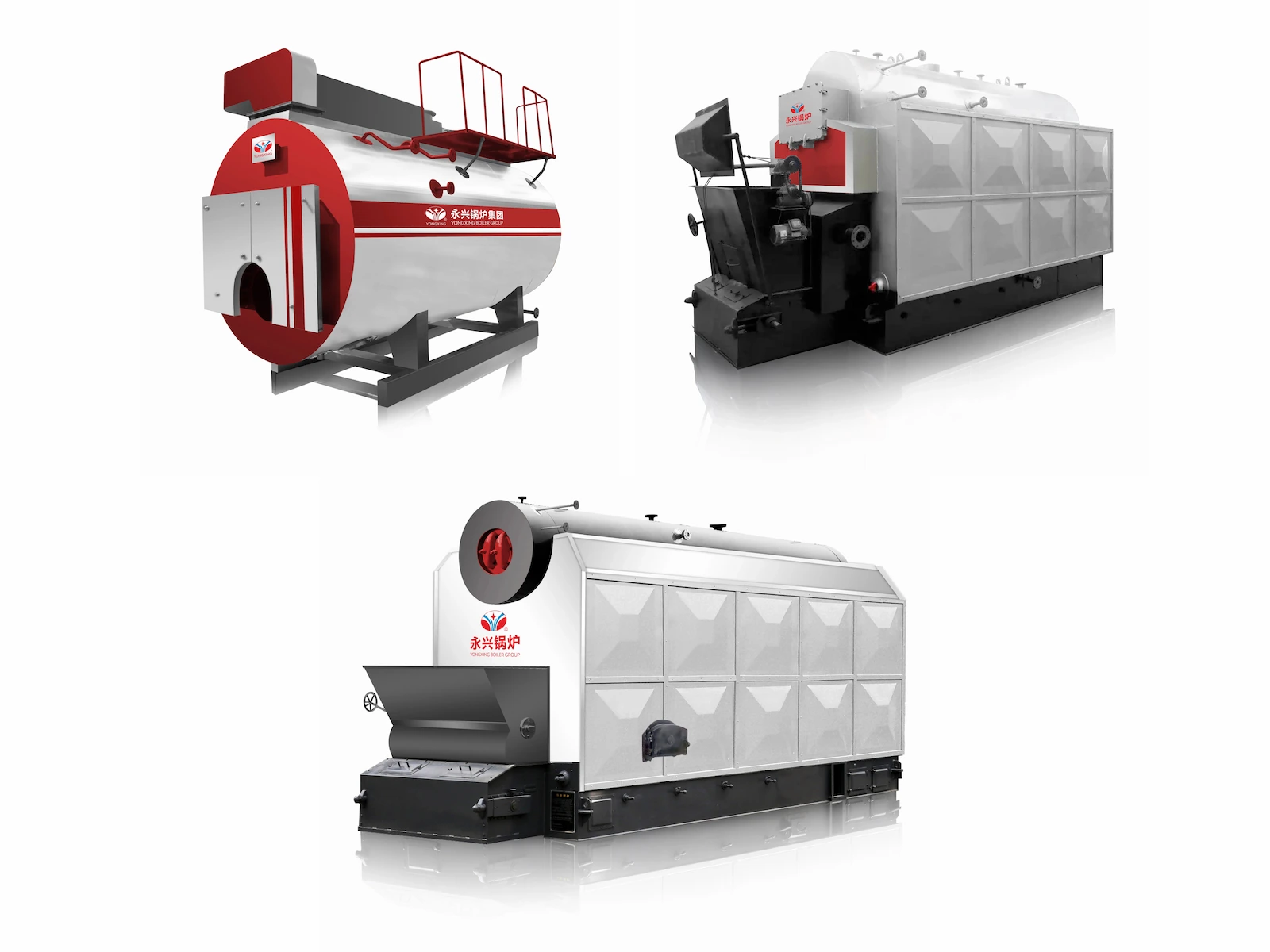
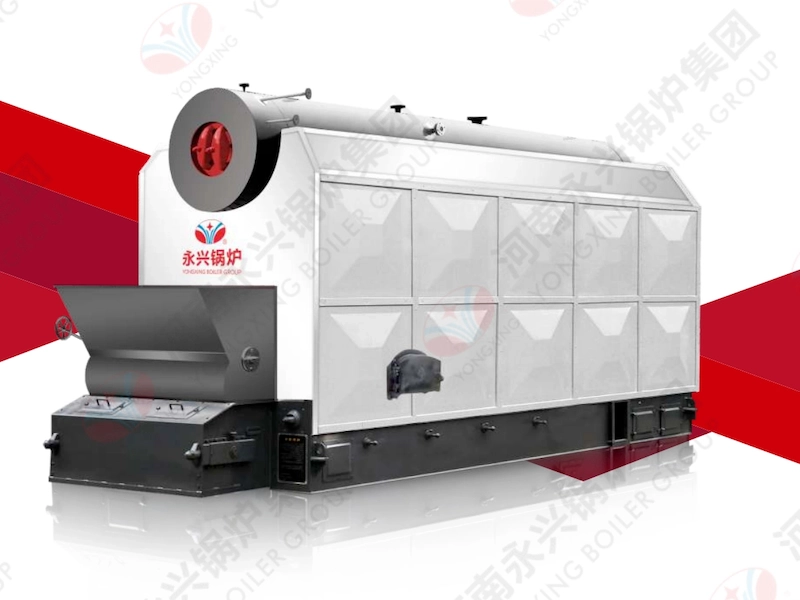
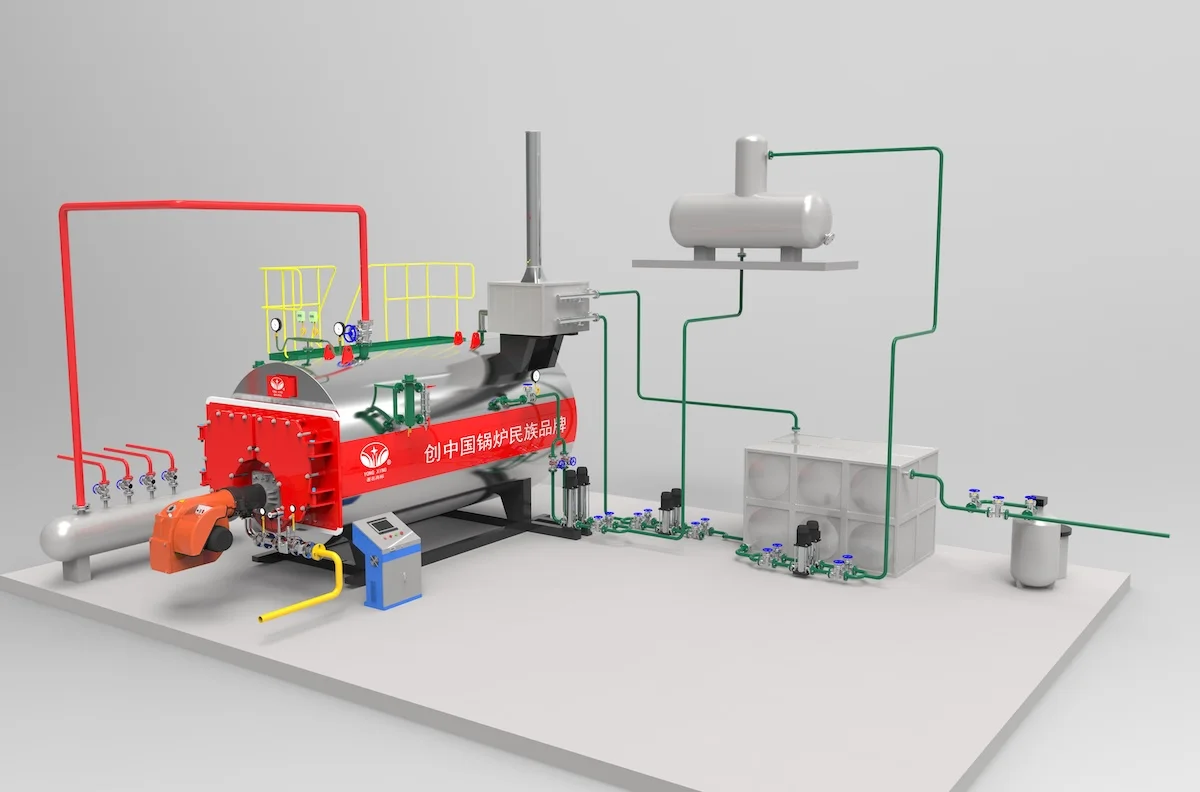
A 4 ton boiler is an industrial steam boiler designed to produce 4,000 kg of steam per hour (4 TPH), equivalent to approximately 2.8 MW of thermal capacity. Depending on fuel availability and operating requirements, common configurations include WNS gas/oil-fired, DZL coal/biomass-fired, and SZL coal/biomass water-tube boilers, with a reference 2026 EXW price of approximately USD 25,000–75,000.
A 4 TPH boiler is typically suitable for factories with a continuous steam demand of around 2.5–3.5 t/h, providing sufficient capacity reserve for short-term load fluctuations and future expansion without excessive oversizing. For factories planning capacity growth, the system can also be designed with reserved space and interfaces for future boiler expansion..
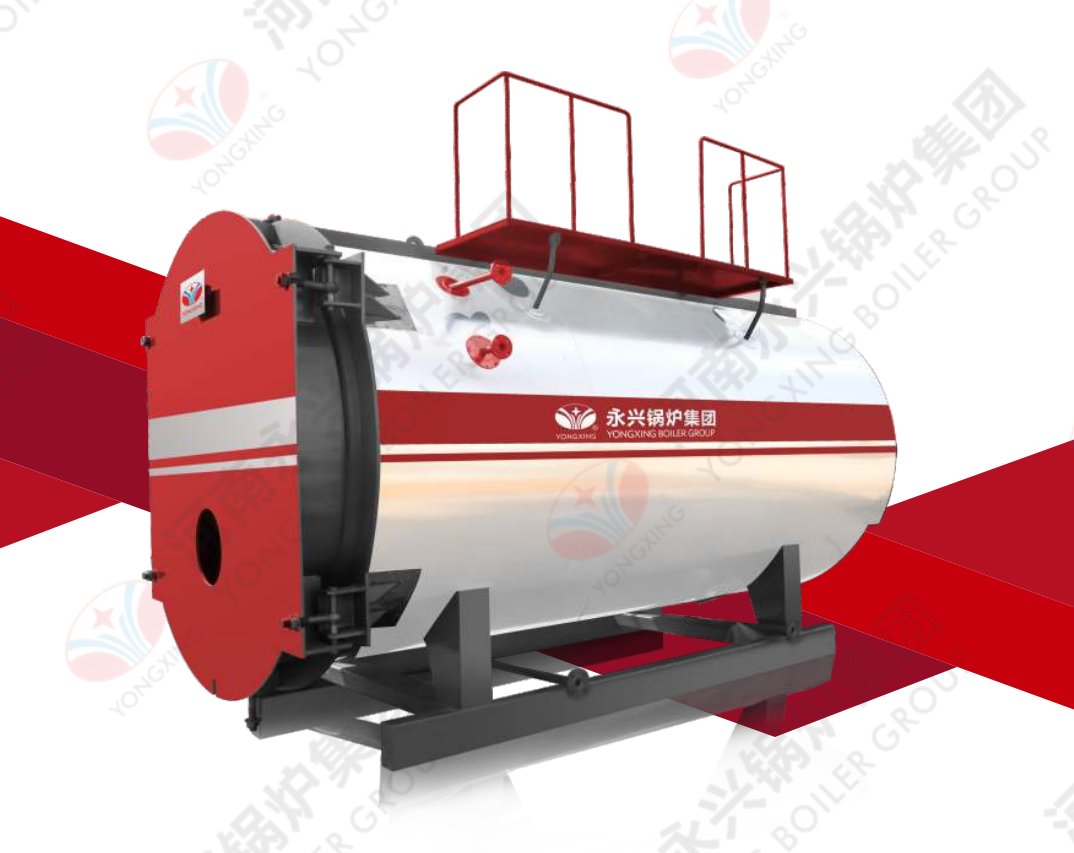
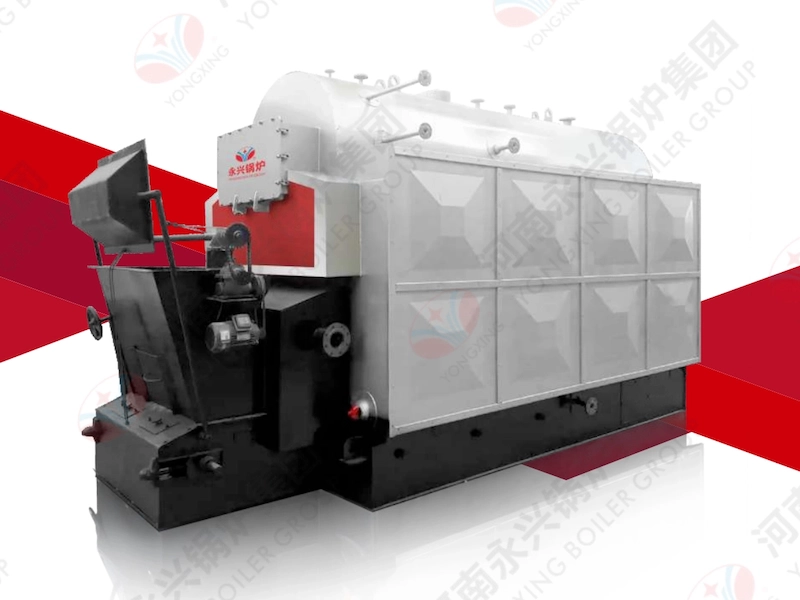
| Model |
|
|
|
| the reference 2026 EXW price | USD 25,000 – 42,000 | USD 35,000 – 58,000 | USD 48,000 – 75,000 |
| Capacity | 4 t/h | 4 t/h | 4 t/h |
| Boiler Type | Gas & oil fired steam boiler | Coal & biomass fired steam boiler | Coal & biomass fired steam boiler |
| Steam Pressure | 1.25 MPa | 1.25 MPa | 1.25/2.5 MPa |
| Steam Temperature | 194 °C | 194 °C | 194/225 °C |
| Compatible Fuels | Light Oil, Heavy Oil, Natural Gas, City Gas, Biogas | Coal, biomass | Coal, biomass |
| Thermal Efficiency | Up to 100.9% based on LHV with condenser; | Up to 88% with economizer | Up to 88% with economizer |
| Design Features |
Latent heat capture with up to 100.9% thermal efficiency(LHV); condenser zone crafted from premium ND steel/stainless steel |
Fully automatic control with auto-feeding, water regulation, and overpressure protection/alarm; Built-in multi-stage dust removal ensures emissions meet environmental regulations. |
Double Drum Water Tube: Larger heating surfaces for higher steam loads; Membrane Water Wall:100% sealed prevent heat loss, maximize heat absorption, and reduce maintenance; Sectional Air Supply: Independent, adjustable air chambers for complete, smokeless combustion. |
| Core Advantages |
Compact Integrated "Plug-and-Play" Design: Skid-mounted packaged structure integrates all core components, saving valuable floor space and enabling rapid, hassle-free on-site installation; Intelligent PLC Automated Control System: Features auto-ignition, automated load regulation, and self-diagnosis to guarantee optimal fuel efficiency with minimal labor costs. |
Threaded Fire Tubes: Generates turbulence to boost heat transfer by 1.2-1.5 times for faster steam production; Small-flake chain grate with independent air chambers for precise wind distribution and complete combustion; Wing-Shaped Flues: Dual-side flues prevent tube plate cracking from high temperatures and enhance efficiency. |
40% - 60% Energy Savings and High Fuel Flexibility: Runs on low-cost biomass (pellets, rice husks, palm shells), slashing cumulative fuel costs by up to 60% compared to oil or gas boilers. (Based on typical fuel market rates) |
| Max Transport Weight(kg) | 12400 | 19000 | 23000 |
| Max Transport Dimension/(LxWxH) (mm) | 4,400 × 2,300 × 2,600 | 6,500 × 2,500 × 3,100 | 6,300 × 2,700 × 3,200 |
| Transport Mode |
Land: 13.5m lowbed trailer (total height ≤ 3.6m); Sea: 40' HQ Container or Flat Rack. |
Land: Ultra-lowbed trailer (total height ≈ 4.0m, check clearance); Sea: Breakbulk or OOG Flat Rack. |
Land: Ultra-lowbed trailer (total height ≈ 4.0m); Sea: Breakbulk or OOG Flat Rack. |
| Installation | Skid-mounted / modular installation (overall lifting and positioning, no field assembly). | Skid-mounted / modular installation (overall lifting and positioning, no field assembly). | Skid-mounted / modular installation (overall lifting and positioning, no field assembly). |
| Site Installation Requirements |
1. Foundation: Concrete pad (thickness ≥ 200mm, capacity ≥ 22 tons). 2. Space: 25-ton crane for unloading; clearance width > 3m, height > 4m. 3. Utilities: Piping and power cables routed to tie-in points in advance. |
1. Foundation: Concrete pad (thickness ≥ 300mm, capacity ≥ 28 tons). 2. Space: 35-ton to 50-ton crane for unloading; clearance width > 3.5m, height > 4.5m. 3. Utilities: Piping and power cables routed to tie-in points in advance. |
1. Foundation: Concrete pad (thickness ≥ 300mm, capacity ≥ 32 tons). 2. Space: 50-ton crane for unloading; clearance width > 3m, height > 5m. 3. Utilities: Piping and power cables routed to tie-in points in advance. |
| Operating Parameters: Rated Gauge Pressure = 1.25 MPa | Standard Enthalpy Demand = 600,000 kcal/ton (Feedwater Temp.≈68°C) | ||||||
|---|---|---|---|---|---|---|
| Boiler Model | Operating Condition | Fuel Type | Thermal Efficiency | Unit Price | Fuel Consumption | Fuel Cost(USD) |
| WNS4-1.25-YQ | With condenser, LHV | Natural Gas | 100.9% | 0.46USD/m³ | 280.0m³ | 128.80 |
|
DZL4-1.25-T SZL4-1.25-T |
With economizer | Biomass Pellet | 88.0% | 0.16USD/kg | 682kg | 109.12 |
|
DZL4-1.25-ALL SZL4-1.25-ALL |
With economizer | Bituminous Coal | 88.0% | 0.13USD/kg | 545.6kg | 70.93 |
|
Note: 1、All projections are theoretical estimates assuming constant fuel prices. Fuel calorific values and efficiencies are expressed on an LHV basis (Natural Gas: 8,500 kcal/m³ | Biomass: 4,000 kcal/kg | Bituminous Coal: 5,000 kcal/kg). 2、Thermal efficiencies are standardized baseline values for comparison only; actual performance varies with fuel quality, moisture content, and operating conditions. 3、For condensing natural gas boilers, efficiencies above 100% reflect LHV-based latent heat recovery. 4、Extra operating costs such as electricity, water, labor, and maintenance are excluded. 5、Intermediate calculations use full precision; displayed figures are rounded. |
||||||
The reference 2026 EXW price of a 4 ton steam boiler:
4 ton gas/oil fired steam boiler (WNS): USD 25,000 – 42,000
4 ton coal/biomass fired steam boiler (DZL): USD 35,000 – 58,000
4 ton coal/biomass fired steam boiler (SZL): USD 48,000 – 75,000
The final price depends on working pressure, fuel system, burner selection, auxiliary equipment, and project requirements.
Choose a WNS boiler for gas or oil when you need high automation, compact installation, and easy operation. Choose a DZL boiler when coal or biomass is inexpensive and fuel cost is the priority. Choose an SZL boiler for continuous industrial operation or higher steam pressure up to 2.5 MPa. The final choice should also consider local fuel prices, emission requirements, and boiler room conditions.
A single 4 ton boiler lowers your upfront equipment cost, takes up less boiler-room space, and simplifies maintenance. Two 2 ton boilers cost more initially, but they give you better low-load efficiency during off-peak hours and 100% backup redundancy if one unit needs service.
Gas-fired boilers operating under 40% capacity suffer from frequent cycling, wasted fuel, and acid dew-point corrosion on cold ends. Solid-fuel chain-grate boilers (DZL/SZL) should stay above 50% load to prevent unsteady fires, air-distribution imbalance, or flameout.
It is built for medium-scale plants—such as textile dyeing, food processing, chemical processing, and paper packaging—that run 2 to 4 continuous steam lines. For massive industrial parks or wide steam distribution networks, a 6 to 10 ton boiler room is usually required.
WNS series boilers burn Natural Gas, LPG, Diesel, or Biogas. Solid-fuel DZL, SZL, and DZH boilers burn biomass pellets, bituminous coal, wood chips, farm residues, and palm shells (PKS).
DZL boilers use an automatic chain grate designed for small, standardized fuels like pellets or crushed coal. DZH boilers use a hand-fired grate. While DZH requires manual stoking, it has no motorized moving parts to fail and easily burns bulky, irregular fuels like raw wood logs or palm waste.
For 4–6 ton total demand, run the 4 ton boiler for steady base load and use a 2 ton boiler for peak shaving or backup. For plant demand over 10 tons, run 6–10 ton boilers for the main steam header and use the 4 ton boiler for specific workshops or off-peak shifts.
Advantages: Cheaper purchase cost, faster delivery, easier shipping in a 40ft Flat Rack container, and smaller civil foundations.
Limitations: Lower total steam volume, making it unsuitable for massive complex expansions unless you add a second parallel unit later.
current demand is fixed, install a 4 ton boiler. If you plan to expand within 3–5 years, build the civil foundation, steam header (manifold), soft water system, and main piping for a 6–10 ton setup from day one to avoid costly teardowns later.
Boiler solutions for the food industry
Boiler solutions for chemical
Boiler solutions for heating industry
Boiler solutions for pharmaceutical
Boiler solutions for the hotel industry
Boiler solutions for paper industry
Boiler solutions for textile industry
Boiler solutions for building materials
Boiler solutions for breeding
Boiler solutions for feed industry
Boiler solutions for mining industry
Boiler solutions for brewing industry
Yongxing Special Equipment Co., Ltd. is located in Taikang County, Zhoukou City, Henan Province. Established in the early 1980s, it is a company specializing in the research, design, production, sales, installation, renovation, and a series of services for products such as boilers and pressure vessels.
As one of the earlier companies in the domestic boiler industry, Yongxing Special Equipment was the first to obtain the Class A boiler manufacturing license issued by the State Administration for Market Regulation. Subsequently, it acquired the Class A pressure vessel manufacturing license and the Class A boiler installation, renovation, and repair license.
Development History
Manufacturing Plant Area
Patented Technology
Exported Countries
Tell us your project type and operating requirements. We will provide you with the best solution based on your requirements.