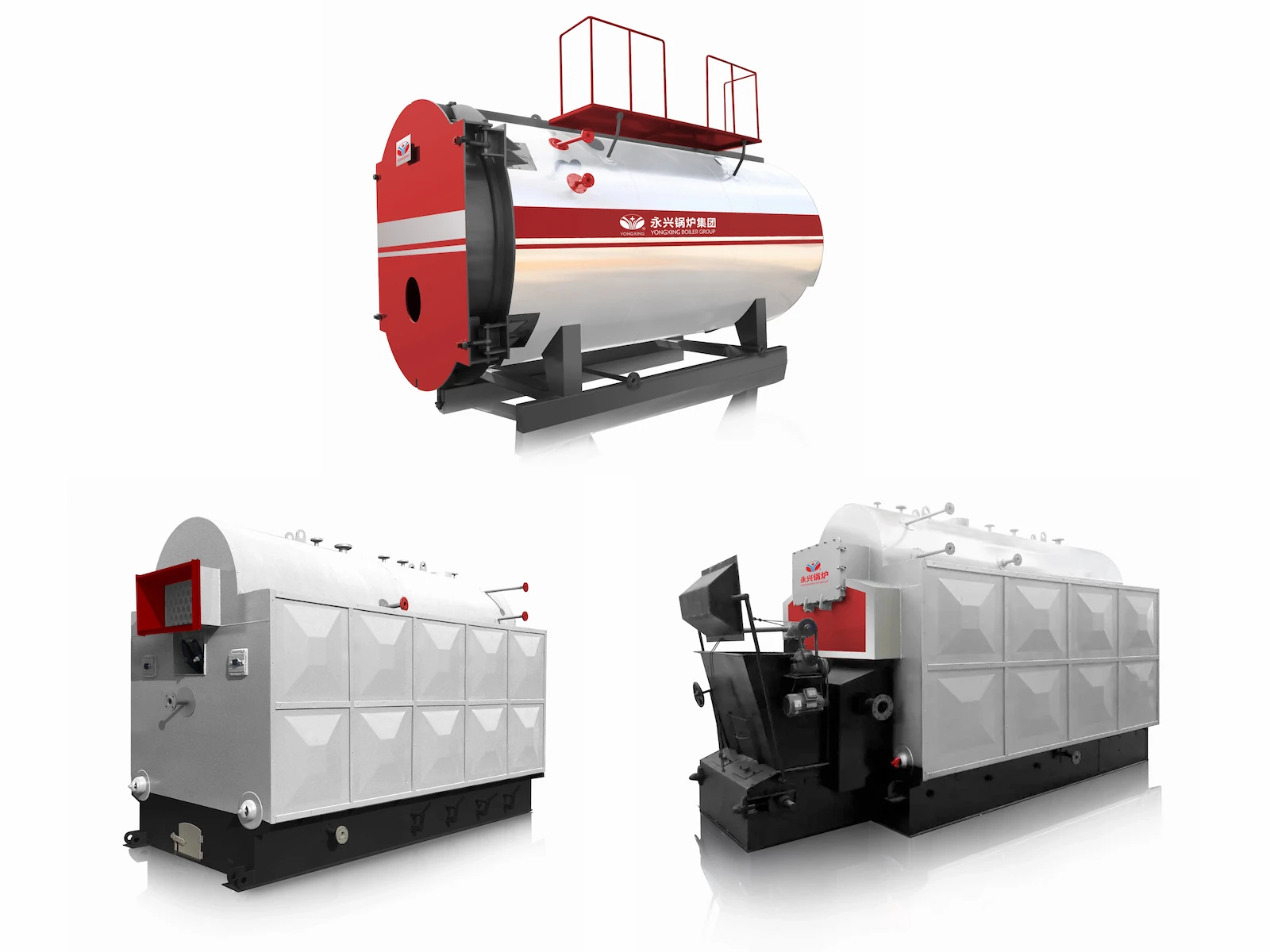
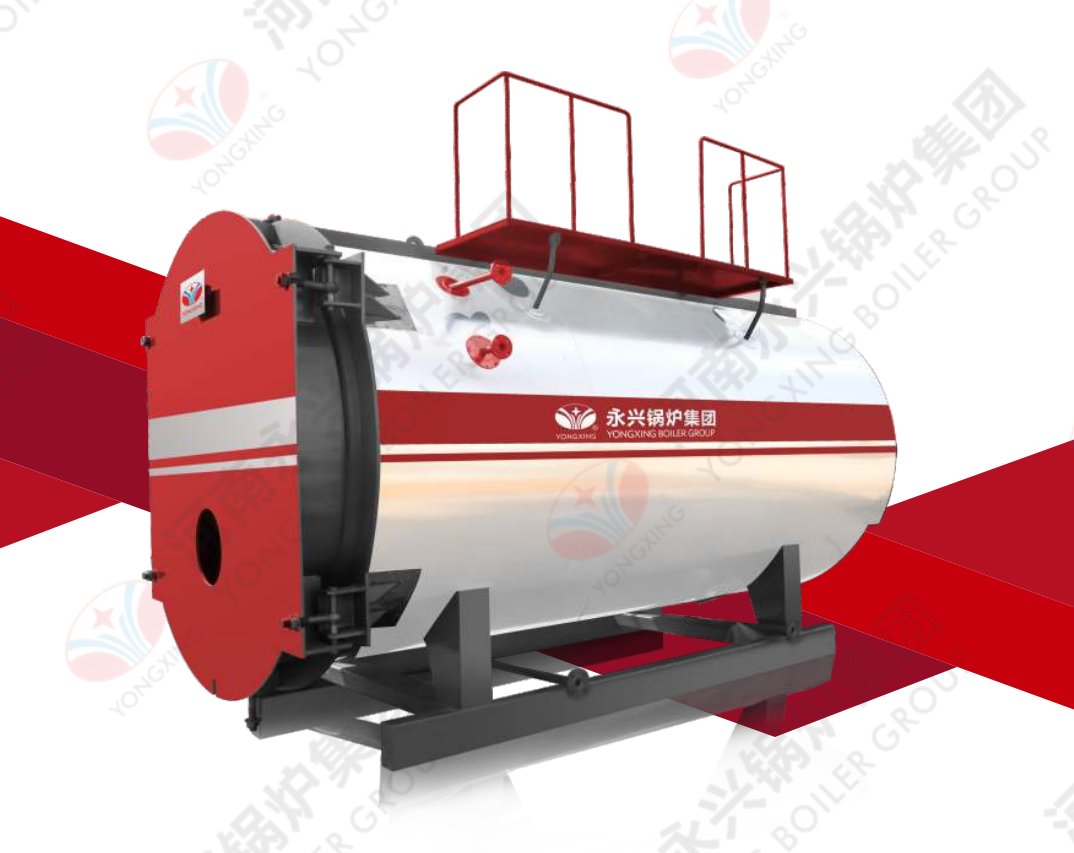
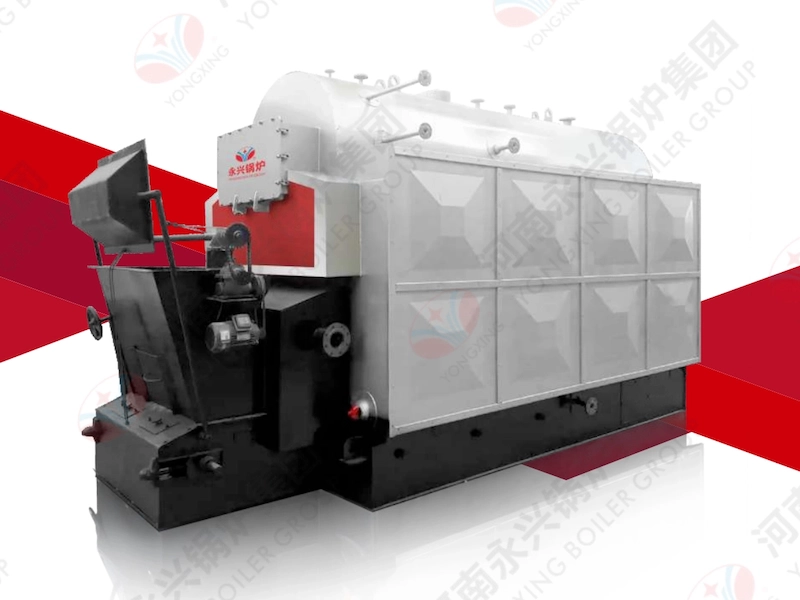
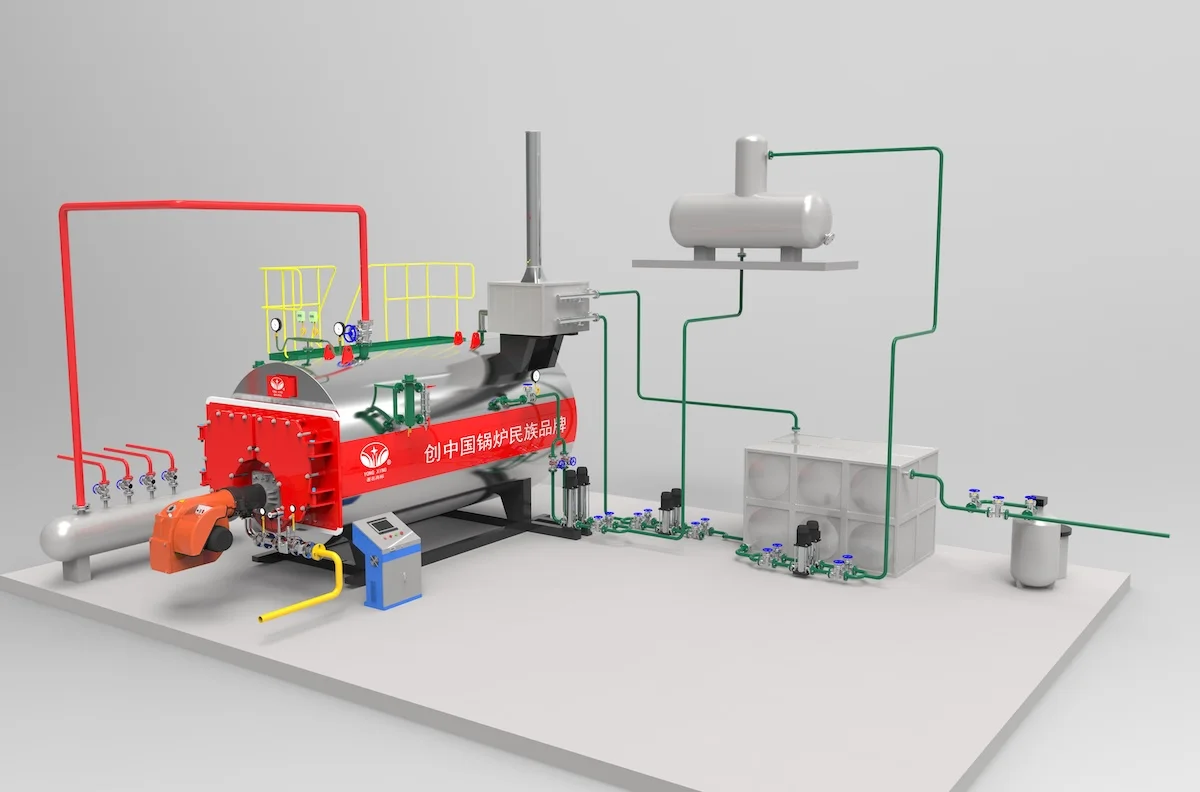
A 3 ton boiler is an industrial steam boiler designed to produce 3,000 kg of steam per hour (3 TPH), equivalent to approximately 2.1 MW of thermal capacity. Depending on fuel type and boiler design, the reference 2026 EXW price ranges from approximately USD 20,000 to 48,000 for WNS gas/oil-fired, DZL coal/biomass-fired, and DZH coal/biomass-fired boilers.
A 3 ton steam boiler is typically suitable for small-to-medium factories with steady steam demand below 3 t/h. It provides more capacity reserve than a 2 TPH unit without moving directly to a larger 4 TPH system, making it suitable for growing production lines or moderate load fluctuations. WNS prioritizes automation and compact installation, while DZL and DZH provide solid-fuel options where coal or biomass is more economical.
| Model |
|
|
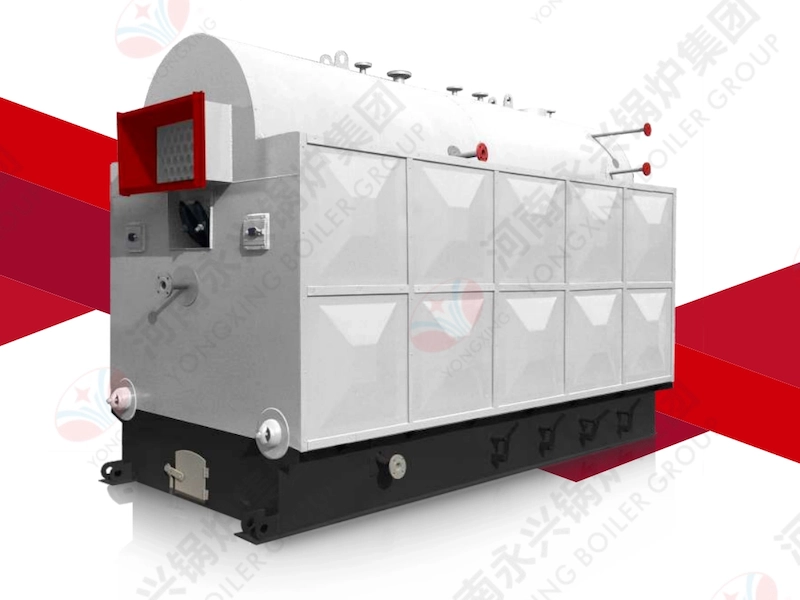
|
| the reference 2026 EXW price | USD 20,000 – 34,000 | USD 29,000 – 48,000 | USD 21,000 – 35,000 |
| Capacity | 3 t/h | 3 t/h | 3 t/h |
| Boiler Type | Gas & oil fired steam boiler | Coal & biomass fired steam boiler | Coal & biomass fired steam boiler |
| Steam Pressure | 1.25/1.6/2.5 MPa | 1.25 MPa | 1.25 MPa |
| Steam Temperature | 194 °C | 194 °C | 194 °C |
| Compatible Fuels | Light Oil, Heavy Oil, Natural Gas, City Gas, Hydrogen | Coal, biomass | Coal, biomass |
| Thermal Efficiency |
Up to 100.9% based on LHV with condenser; Up to 90–93% without condenser |
Up to 82% without economizer; Up to 88% with economizer |
Up to 80% |
| Design Features |
Ultra-Low-Nitrogen (Low-NOx <30mg); Latent heat capture with up to 100.9% thermal efficiency(LHV); |
Eco-Friendly Compliance Automated Chain Grate; Built-in multi-stage dust removal ensures emissions meet environmental regulations. |
Fixed grate manual firing system; Suitable for coal, biomass, and solid fuels with different sizes and characteristics; Near-Zero Failure Rate & Maintenance. |
| Core Advantages |
≥ 100.9% Efficiency: Cuts gas bills by 5%–8% via deep condensing recovery; Intelligent PLC Automated Control System: Features auto-ignition, automated load regulation, and self-diagnosis to guarantee optimal fuel efficiency with minimal labor costs. |
High Automation: Automated feeding and water regulation minimize manual labor; Lower Fuel Cost: Runs on biomass or coal, cutting steam cost 20%-40% versus gas at this scale; Small-flake chain grate with independent air chambers for precise wind distribution and complete combustion. |
Direct Waste Firing: Accepts bulky wood waste, factory scraps, and raw coal without requiring expensive crushing equipment; Zero Mechanical Failure: Bulletproof simplicity with no complex motorized moving parts to ensure low maintenance. |
| Max Transport Weight(kg) | 10,000 | 24,000 | 23,000 |
| Max Transport Dimension/(LxWxH) (mm) | 4,100 × 2,000 × 2,400 | 5,700 × 2,600 × 2,800 | 5,200 × 2,000 × 3,300 |
| Transport Mode |
Land: 13.5m lowbed trailer (total height ≤ 3.6m); Sea: 40' HQ Container or Flat Rack. |
Land: 13.5m lowbed trailer (total height ≤ 3.7m); Sea: 40' HQ Container or Flat Rack./td> |
Land: 13.5m lowbed trailer (total height ≤ 3.7m); Sea: 40' HQ Container or Flat Rack. |
| Installation | Skid-mounted / modular installation (overall lifting and positioning, no field assembly). | Skid-mounted / modular installation (overall lifting and positioning, no field assembly). | Skid-mounted / modular installation (overall lifting and positioning, no field assembly). |
| Site Installation Requirements |
1. Foundation: Concrete pad (thickness ≥ 200mm, capacity ≥ 15 tons based on operational weight). 2. Space: 25-ton crane for unloading; clearance width > 3.0m, height > 4.0m. 3. Utilities: Piping and power cables routed to tie-in points in advance. |
1. Foundation: Concrete pad (thickness ≥ 300mm, capacity ≥ 30 tons based on operational weight). 2. Space: 50-ton crane for unloading; clearance width > 3.5m, height > 4.5m. 3. Utilities: Piping and power cables routed to tie-in points in advance. |
1. Foundation: Concrete pad (thickness ≥ 300mm, capacity ≥ 30 tons based on operational weight). 2. Space: 50-ton crane for unloading; clearance width > 3.0m, height > 4.5m. 3. Utilities: Piping and power cables routed to tie-in points in advance. |
| Operating Parameters: Rated Gauge Pressure = 1.25 MPa | Standard Enthalpy Demand = 600,000 kcal/ton (Feedwater Temp.≈68°C) | ||||||
|---|---|---|---|---|---|---|
| Boiler Model | Operating Condition | Fuel Type | Thermal Efficiency | Unit Price | Fuel Consumption | Fuel Cost(USD) |
| WNS3-1.25-YQ | Without condenser | Natural Gas | 91.5% | 0.46USD/m³ | 231.3m³ | 106.40 |
| WNS3-1.25-YQ | With condenser, LHV | Natural Gas | 100.9% | 0.46USD/m³ | 210.0m³ | 96.60 |
| DZL3-1.25-T | Without economizer | Biomass Pellet | 82.0% | 0.16USD/kg | 548.7kg | 87.79 |
| DZL3-1.25-AII | Without economizer | Bituminous Coal | 82.0% | 0.13USD/kg | 438.9kg | 57.06 |
| DZL3-1.25-T | With economizer | Biomass Pellet | 88.0% | 0.16USD/kg | 511.5kg | 81.84 |
| DZL3-1.25-AII | With economizer | Bituminous Coal | 88.0% | 0.13USD/kg | 409.2kg | 53.20 |
| DZH3-1.25-T | Standard (Manual) | Biomass Pellet | 80.0% | 0.16USD/kg | 562.5kg | 90.00 |
| DZH3-1.25-AII | Standard (Manual) | Bituminous Coal | 80.0% | 0.13USD/kg | 450.0kg | 58.50 |
|
Note: 1、All projections are theoretical estimates assuming constant fuel prices. Fuel calorific values and efficiencies are expressed on an LHV basis (Natural Gas: 8,500 kcal/m³ | Biomass: 4,000 kcal/kg | Bituminous Coal: 5,000 kcal/kg). 2、Thermal efficiencies are standardized baseline values for comparison only; actual performance varies with fuel quality, moisture content, and operating conditions. 3、For condensing natural gas boilers, efficiencies above 100% reflect LHV-based latent heat recovery. 4、Extra operating costs such as electricity, water, labor, and maintenance are excluded. 5、Intermediate calculations use full precision; displayed figures are rounded. |
||||||
Estimated 2026 EXW reference prices for 3 ton steam boilers:
3 ton gas/oil fired steam boiler (WNS): USD 20,000 – 34,000
3 ton coal/biomass fired steam boiler (DZL): USD 29,000 – 48,000
3 ton coal/biomass fired steam boiler (DZH): USD 21,000 – 35,000
Final pricing depends on working pressure rating, burner selection, and auxiliary configurations (water treatment, economizer, dust collectors).
Under full-load continuous operation (LHV basis):
Gas-fired (WNS3-1.25-YQ): approx. 210–220 Nm³/h of natural gas (calorific value ~8,500 kcal/Nm³).
Biomass-fired (DZL3-1.25-T): approx. 500–550 kg/h of wood pellets (calorific value ~4,000 kcal/kg).
Coal-fired (DZL3-1.25-AII): approx. 440–460 kg/h of bituminous coal (calorific value ~5,000 kcal/kg).
Actual consumption varies with feedwater temperature, operating load, and fuel quality.
A 3 t/h boiler suits small-to-medium plants with steady steam demand between 2.0 and 3.0 t/h — textile dyeing, food and beverage processing, microbreweries, paper and packaging, feed mills, and pharmaceutical sterilization. It’s also commonly used as a backup or peak-shaving unit alongside a larger central boiler.
A 3 ton steam boiler has a rated steam capacity of 3,000 kg/h, equivalent to approximately 2.1 MW of thermal capacity or 190–195 BHP (boiler horsepower). These conversions are commonly used when comparing boiler capacities specified in different units.
tandard lead time is 25–35 days for WNS models and 35–45 days for DZL/DZH, after deposit and drawing sign-off. This can extend during peak season or for non-standard configurations. Confirm current lead time with the factory before finalizing your shipping schedule.
Certification requirements depend on the destination country, boiler pressure, and local pressure-equipment regulations. Always confirm local regulatory requirements before ordering. Yongxing holds a Class A boiler manufacturing license and ISO certifications, and can provide mill test certificates, welding procedure specifications (WPS), and hydrostatic test reports for customs clearance.
Choose a WNS boiler when gas or oil is available and high automation, compact installation, and easy operation are priorities. Choose a DZL boiler when coal or biomass offers a lower local fuel cost and automatic solid-fuel feeding is preferred. Choose a DZH boiler for lower initial investment and simpler solid-fuel operation where manual feeding is acceptable.
If your steam demand is well below 3 t/h and expected to remain stable, a 3 ton boiler is usually sufficient. If demand is approaching 3 t/h or production is expected to expand, a 4 ton boiler provides more capacity reserve. Consider peak steam demand and future expansion before making the final choice.
Automated WNS and DZL boilers need only 1 operator per shift for routine monitoring and water testing. Manual-fired DZH boilers need 1–2 operators per shift for continuous stoking and ash removal. Over 2–3 years, the added labor cost of a manual unit often outweighs its lower purchase price.
Boiler solutions for the food industry
Boiler solutions for chemical
Boiler solutions for heating industry
Boiler solutions for pharmaceutical
Boiler solutions for the hotel industry
Boiler solutions for paper industry
Boiler solutions for textile industry
Boiler solutions for building materials
Boiler solutions for breeding
Boiler solutions for feed industry
Boiler solutions for mining industry
Boiler solutions for brewing industry
Yongxing Special Equipment Co., Ltd. is located in Taikang County, Zhoukou City, Henan Province. Established in the early 1980s, it is a company specializing in the research, design, production, sales, installation, renovation, and a series of services for products such as boilers and pressure vessels.
As one of the earlier companies in the domestic boiler industry, Yongxing Special Equipment was the first to obtain the Class A boiler manufacturing license issued by the State Administration for Market Regulation. Subsequently, it acquired the Class A pressure vessel manufacturing license and the Class A boiler installation, renovation, and repair license.
Development History
Manufacturing Plant Area
Patented Technology
Exported Countries
Tell us your project type and operating requirements. We will provide you with the best solution based on your requirements.